SAAS / BUILD IN PUBLIC / READING LIST
10 Indie Builders to Follow on X for SaaS Ideas
A practical follow list for learning SaaS, watching products get built in public, and finding ideas worth testing for your own audience.
 Vamshi KrishnaOctober 16, 2026 8 min read

If you want to build a SaaS, your X feed can be more than a stream of opinions. Follow people who show what they ship, how they find customers, and what happens after a launch. Their work can become a living collection of product case studies.
These are my picks for that purpose. The first eight are builders with products you can inspect. The last two are especially useful for thinking about the business around the product. This is a curated list, not a ranking by followers or revenue. I checked the current handles and public projects in October 2026.
Watch the work, not just the wins.
Open the product as well as the profile. The gap between a post and the actual customer experience is often where the lesson is.
Fast launches and a portfolio of small bets
Marc Lou
@marclou on XMarc is one of the clearest people to watch when you want to see an idea move from a tiny experiment to a paid product. His public portfolio includes TrustMRR, DataFast, ShipFast, and plenty of projects that did not become the main business.
What to study: Study how he names a product, shows its value quickly, launches it, and decides whether to keep going.
Marc's project portfolio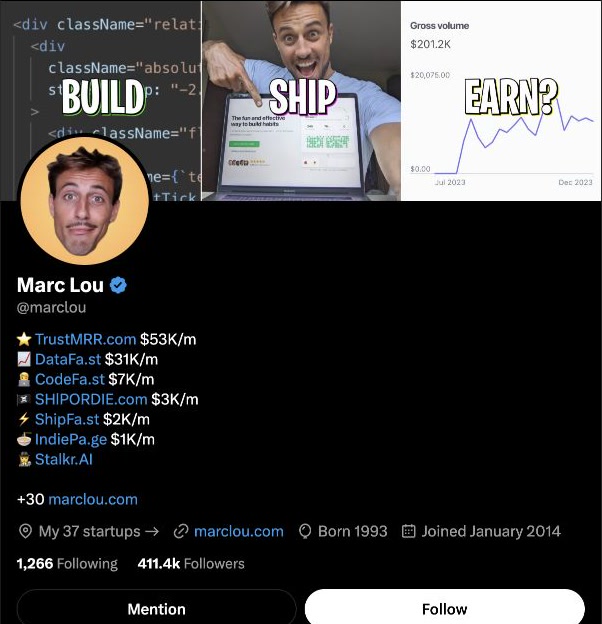 View profile on X
Repeated shipping and finding demand
Pieter Levels
@levelsio on XPieter's archive is useful because it shows the breadth of the work: Photo AI, Remote OK, Nomads, experiments, and projects that failed to take off. You can see how one maker tests many directions over time.
What to study: Look at which projects became lasting businesses, and ask what audience or distribution each one already had.
Pieter's full project archive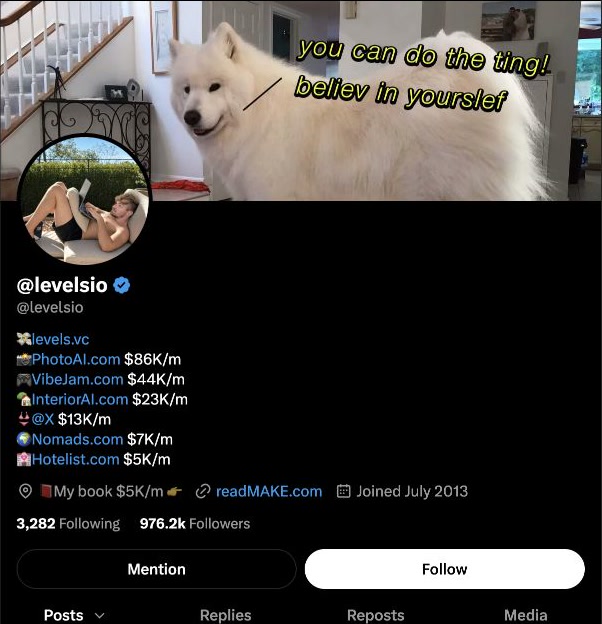 View profile on X
Useful tools with unusually good product detail
Tony Dinh
@tdinh_me on XTony builds software he wants to use, including TypingMind and DevUtils. His work is a strong reminder that an existing category can still make room for a product with a clearer experience and a specific point of view.
What to study: Pay attention to the small workflow frustrations each product removes and how the product page explains them.
Tony's products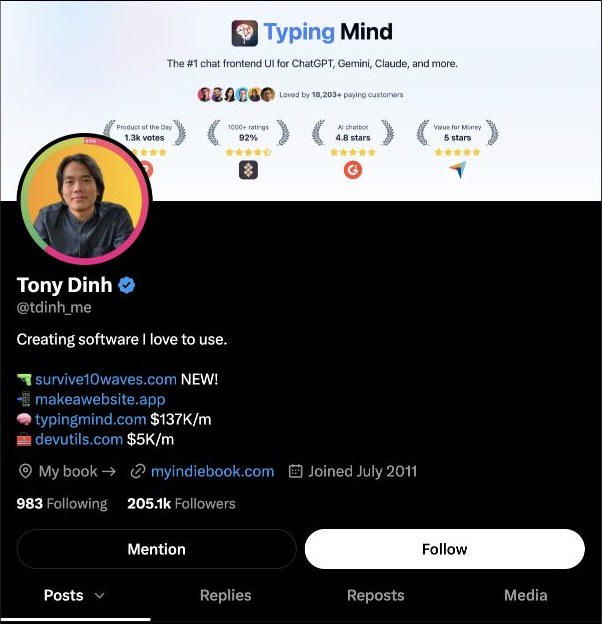 View profile on X
Operating and growing a durable SaaS
Jon Yongfook
@yongfook on XJon founded Bannerbear, an image and video automation API. His writing goes beyond launch day into conversion, marketing, positioning, and how a SaaS business changes as the market changes.
What to study: Read his longer posts when you want to understand the tradeoffs behind pricing, acquisition, and product direction.
Bannerbear founder writing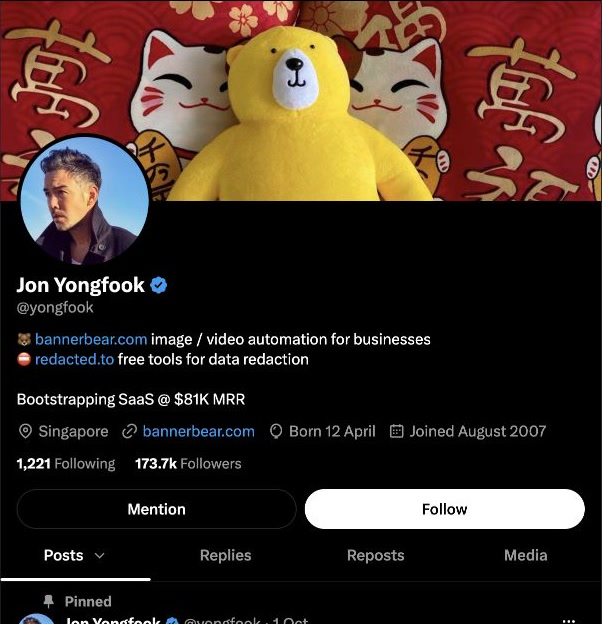 View profile on X
AI products and sharp positioning
Danny Postma
@dannypostma on XDanny founded HeadshotPro and has built other AI products. He is worth watching for the way a broad technical capability gets packaged into one clear outcome for a buyer.
What to study: Notice the niche, the promise on the landing page, and the trust signals that help a customer try an AI product.
HeadshotPro founder profile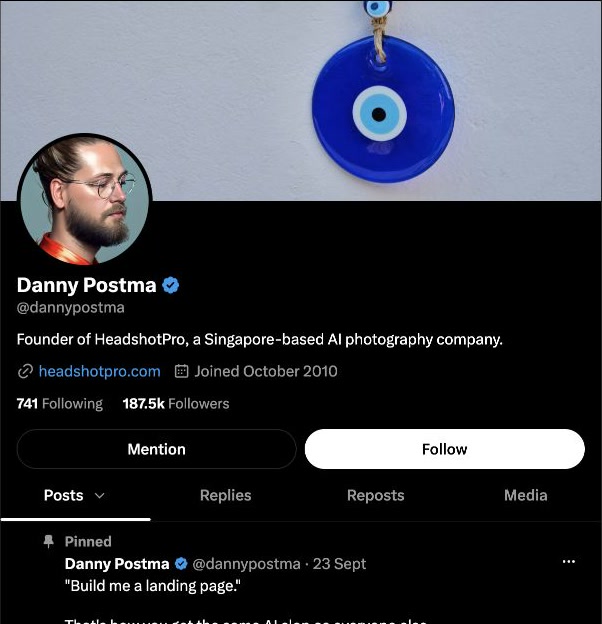 View profile on X
Creator tools and distribution-led products
Tibo Louis-Lucas
@tibo_maker on XTibo co-founded Revid and also works on products around SEO and X growth. Follow him to watch how a small team turns a recurring creator problem into a product, then uses its own product for distribution.
What to study: Look for the loop between what the product makes, where that output is published, and how new users discover it.
About Revid and its founders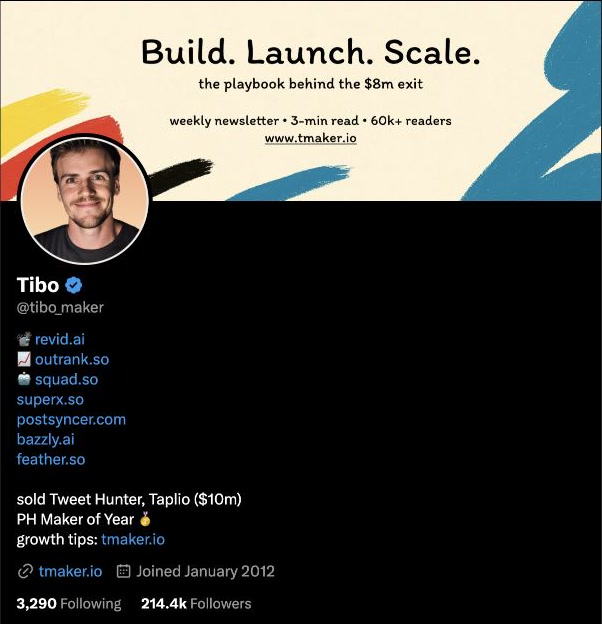 View profile on X
Consumer apps, organic growth, and honest experiments
Jack Friks
@jackfriks on XJack's public project list includes Post Bridge, Lovelee, and several smaller apps. It also records failures. That makes it useful for learning how a builder moves from a personal workflow problem to a product people pay for.
What to study: Watch how he demonstrates products in the channels where potential customers already spend time.
Jack's project list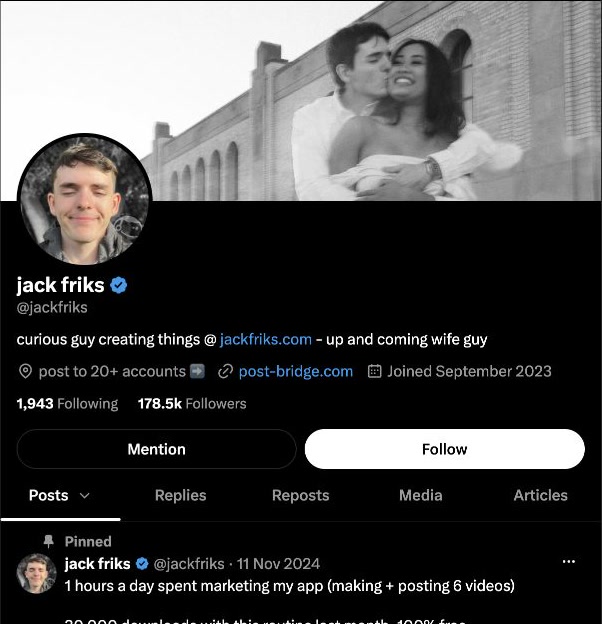 View profile on X
Paid acquisition for small software businesses
Nico Jeannen
@nico_jeannen on XNico is building AdKit after years of running ads. He adds a perspective that many build-in-public feeds miss: distribution through measurable paid campaigns, competitor research, and the work behind acquiring customers.
What to study: Follow the practical ad research and ask whether a product has enough margin and retention to support a paid channel.
Nico's AdKit articles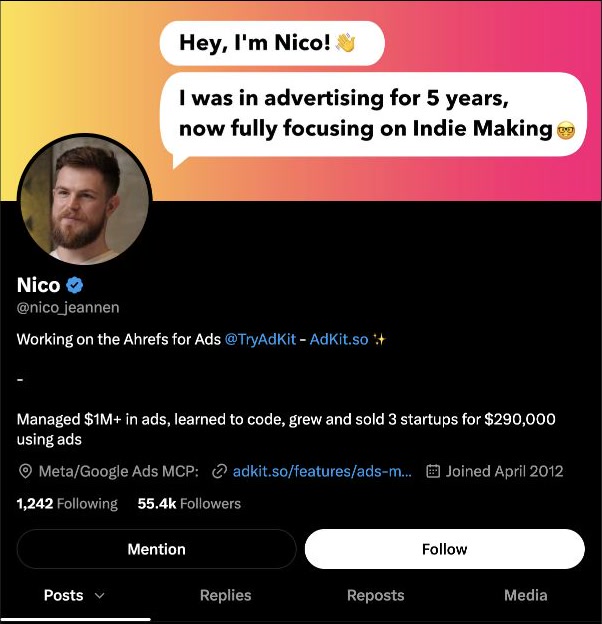 View profile on X
Two more accounts for better judgment.
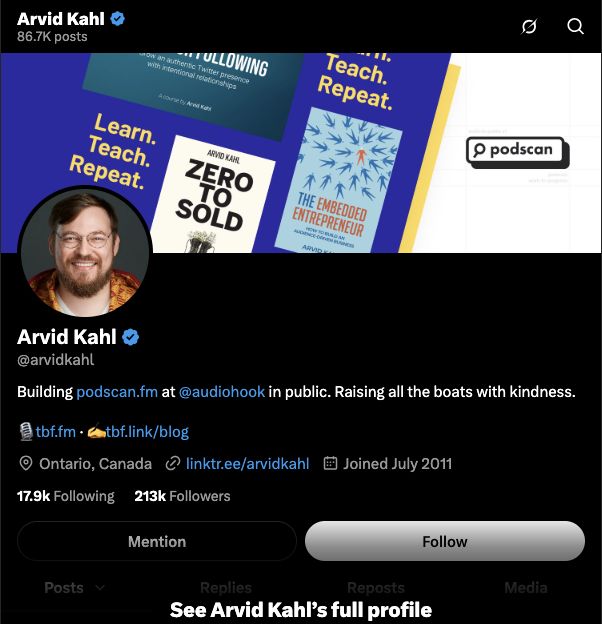
Arvid Kahl
Follow for thoughtful writing on bootstrapping, customer research, and building an audience that cares about a real problem. His Bootstrapped Founder archive is useful when you want more depth than a post can hold.
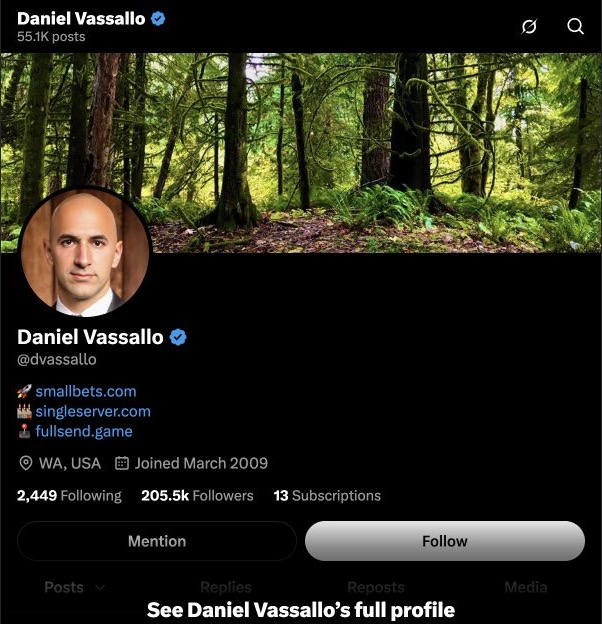
Daniel Vassallo
Follow for the small-bets approach: test modest ideas, learn from the outcome, and avoid making one launch carry your whole future. His Small Bets library expands on that mindset.
Turn inspiration into a testable idea.
Watching founders is useful only when it sharpens your own decisions. Keep a short note for each product that catches your eye:
- Who is paying? Name the customer and the job they need done.
- What is the smallest promise? Write the outcome in one sentence, without a feature list.
- How do people find it? Look for search, social content, partnerships, ads, or an existing audience.
- What could you make specific? Choose a narrower customer, workflow, language, or industry where the current tools feel generic.
For example, a broad social scheduling tool might inspire a workflow built specifically for regional-language video creators. The question to test is whether those creators have a painful gap and will pay to solve it. Talk to them before building.
If you only have time for five accounts, start with Marc, Tony, Jon, Jack, and Nico. Together, they cover shipping, product quality, SaaS operations, organic growth, and paid acquisition.
Save the accounts that teach you something. Then get back to making things.
Explore more articles